Is a Pharmacy Profitable in India? The Honest Numbers
Is a pharmacy business profitable in India? Real gross vs net margins, setup cost, Jan Aushadhi economics, and what actually eats the profit, sourced.

This covers the actual gap between gross and net margin, what the published data shows about setup cost and capital lock-up, the Jan Aushadhi generic model as an alternative economics case, and what changes the answer for a hospital specifically.
What margin does a pharmacy actually earn on branded medicines?
Retailer margin on branded medicines in India is fixed strictly around 16-20% in most cases, with distributor margin sitting lower still, generally 8-12%. A 2011 peer-reviewed study measured retailer margins on five branded medicines running 25-30%, above the commonly cited range, showing real-world figures vary by product category rather than sitting at one fixed number A comparative evaluation of price and quality of off-patent medicines.
This is gross margin, not profit. It is the markup between what a pharmacy pays a distributor and what it charges a patient, before a single rupee of rent, salary or expiry loss is subtracted. Treating this number as take-home profit is the single most common mistake in pharmacy business planning.
Why does the margin on generic and branded-generic medicines run so much higher?
Generic and branded-generic medicines carry substantially higher retailer margins, commonly 20-50% or more, structured specifically to incentivise a pharmacy to stock and recommend them over branded equivalents. The Department of Pharmaceuticals' own high-trade-margin review found this gap real enough to warrant a formal government inquiry High Trade Margin Report.
A pharmacy stocking a sensible mix of both categories earns a genuinely higher blended gross margin than one selling branded medicines exclusively. That is precisely why an unmanaged, incentive-driven stocking policy without regard to patient and doctor preference erodes patient trust faster than it builds margin.
How much of that gross margin actually disappears before it reaches the bank account?
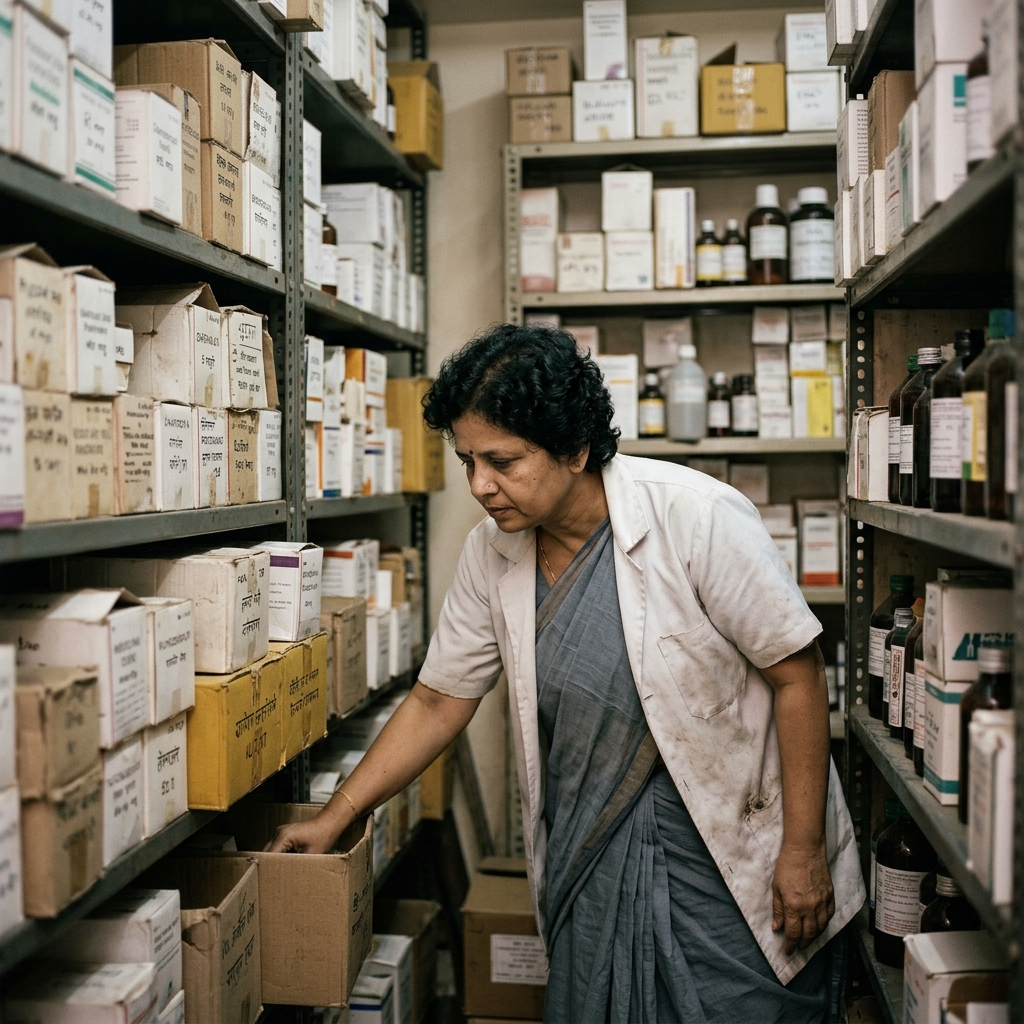
Four costs consistently eat the gap between gross and net margin: pharmacist salaries (a registered pharmacist is a statutory requirement, not optional overhead), rent, expiry and dead-stock write-offs on slow-moving inventory, and interest on the working capital sitting in stock rather than in a bank account. None of these show up in a quoted trade-margin percentage.
Expiry alone is a bigger drag than most first-time owners expect. A pharmacy carrying a wide formulary to serve walk-in demand inevitably stocks some slow movers that expire unsold, and that write-off comes directly out of net margin, not gross. Pharmacy inventory management covers how forecasting and FEFO dispensing reduce this specific loss.
What does it actually cost to set up a pharmacy before any of this margin math applies?
Pharmacy setup cost in India typically runs ₹5-15 lakh for a standalone unit, rising to ₹20-40 lakh or more for a fully equipped institutional pharmacy serving inpatients Hospital pharmacy setup cost in India. Franchise investment runs ₹5-50 lakh depending on the brand and territory, with a separate franchise fee on top.
This capital sits locked in fit-out, licensing and, most heavily, opening inventory, before a single sale generates any margin at all. A pharmacy that costs ₹8 lakh to open can still lose money every month afterward if that inventory is not actively managed toward the higher-margin, faster-moving stock this analysis points to.
Does the Pradhan Mantri Bhartiya Janaushadhi Pariyojana change the profitability picture?
Yes, meaningfully, for a different business model. Under PMBJP, the operating agency earns a fixed 20% margin on MRP excluding tax, plus a purchase-linked incentive of 15% of monthly purchases, enhanced up to ₹5 lakh total for eligible categories including women, differently-abled and Scheduled Caste/Tribe entrepreneurs Guidelines for Opening New PMBJP Kendras.
This is a fundamentally lower-capital, lower-risk model than a full-formulary retail pharmacy: a fixed margin plus a capped incentive, against a narrower product range and much lower starting inventory cost. It answers "is a pharmacy business profitable in India" differently depending on whether the business being asked about is a full-range retail pharmacy or a generic-only Jan Aushadhi Kendra.
Is a hospital's own in-house pharmacy more or less profitable than a standalone retail pharmacy?
A hospital pharmacy has one structural advantage a standalone retail store lacks: a captive, predictable prescription volume from its own doctors, removing the biggest variable in retail pharmacy economics, footfall. But it inherits the same margin structure and the same expiry, staffing and capital-lock risk as any other pharmacy, at a scale that magnifies both the upside and the loss if run poorly.
Prescription leakage is the silent profit killer specific to hospitals: a prescription written in-house that gets filled at an outside chemist because the hospital's own pharmacy didn't stock it, taking the margin and the follow-up relationship with it. Prescription leakage and hospital revenue loss documents this can cost a hospital up to 40% of pharmacy revenue, a loss that has nothing to do with trade-margin percentage and everything to do with stocking discipline.
What actually makes a pharmacy more profitable, beyond the headline margin?
Four factors separate a pharmacy earning 5% net from one earning 12%: location and footfall near a hospital or clinic, a deliberate generic-and-branded stocking mix rather than an accidental one, inventory discipline that minimises expiry, and staffing sized to actual patient volume rather than fixed overhead run at a loss during slow hours.
None of these four factors show up in a trade-margin percentage quoted in a business plan, and all four are the actual difference between the businesses this analysis is describing as profitable and the ones that quietly aren't.
What is the most profitable pharmacy model for a hospital specifically?
For a hospital, the most profitable pharmacy is often one it does not run itself. Under a managed model, a partner absorbs the setup capital, compliance risk, staffing and expiry exposure, and the hospital takes a revenue share without the working-capital lock-up shown above.
Managed hospital pharmacy services covers how that model works in practice, and why it turns a capital-heavy cost centre into a predictable income line instead.
Sources
- 1A comparative evaluation of price and quality of some off-patent medicines — National Institutes of Health, National Library of Medicine, Singal et al., 2011
- 2High Trade Margin Report — Department of Pharmaceuticals, Government of India
- 3Guidelines for Opening of New Pradhan Mantri Bhartiya Janaushadhi Kendras — Department of Pharmaceuticals, Government of India
- 4National Pharmaceutical Pricing Authority — drug price control and margin regulation
- 5Central Drugs Standard Control Organisation — Drugs and Cosmetics Act, 1940 and Rules, 1945
- 6Pharmacy Council of India — registration requirements under the Pharmacy Act, 1948
See what your pharmacy could earn
Get a free breakdown of your hospital's pharmacy revenue potential.
This article is for informational purposes and is not a substitute for professional financial, legal or business advice. Figures are drawn from published sources and vary by state, scale and product mix; consult a qualified professional before making an investment decision.
FAQ
Frequently asked questions
Yes, but net margin (5-12%) is far lower than the 16-50%+ gross trade margin most people quote, because pharmacist salaries, rent, expiry write-offs and working-capital interest all come out of that gross figure before any profit reaches the owner.
It depends entirely on net margin, not gross: a pharmacy doing ₹10 lakh in monthly sales at a 8% net margin nets roughly ₹80,000 a month, but the same sales volume at a poorly managed 3% net margin nets only ₹30,000, with expiry and staffing discipline explaining most of that gap.
Expiry and dead stock from an overly wide formulary, combined with prescription leakage in hospital settings, consistently erode more margin than trade-margin percentage itself; both are operational problems, not market ones, and both are fixable with better stocking discipline.
Yes, when the four profitability drivers, location, stocking mix, inventory discipline and right-sized staffing, are managed deliberately; pharmacies that assume trade margin alone secures a strong outcome, without managing these four factors, consistently underperform.
It is lower-risk and lower-capital rather than straightforwardly more profitable: a fixed 20% margin plus a capped purchase-linked incentive, against a narrower product range and a much smaller opening inventory cost than a full-formulary retail pharmacy requires.
A managed pharmacy model lets a partner fund setup, staffing and compliance while the hospital earns a revenue share, avoiding the capital lock-up and expiry risk that erodes net margin in a self-run pharmacy.
Dr. Vikram NairPharm.D, M.Pharm (Pharmacy Practice)
Clinical Pharmacist & Pharmacy Operations Specialist
Dr. Vikram Nair is a clinical pharmacist specializing in pharmacy licensing, GST and regulatory compliance, and hospital pharmacy operations in India.