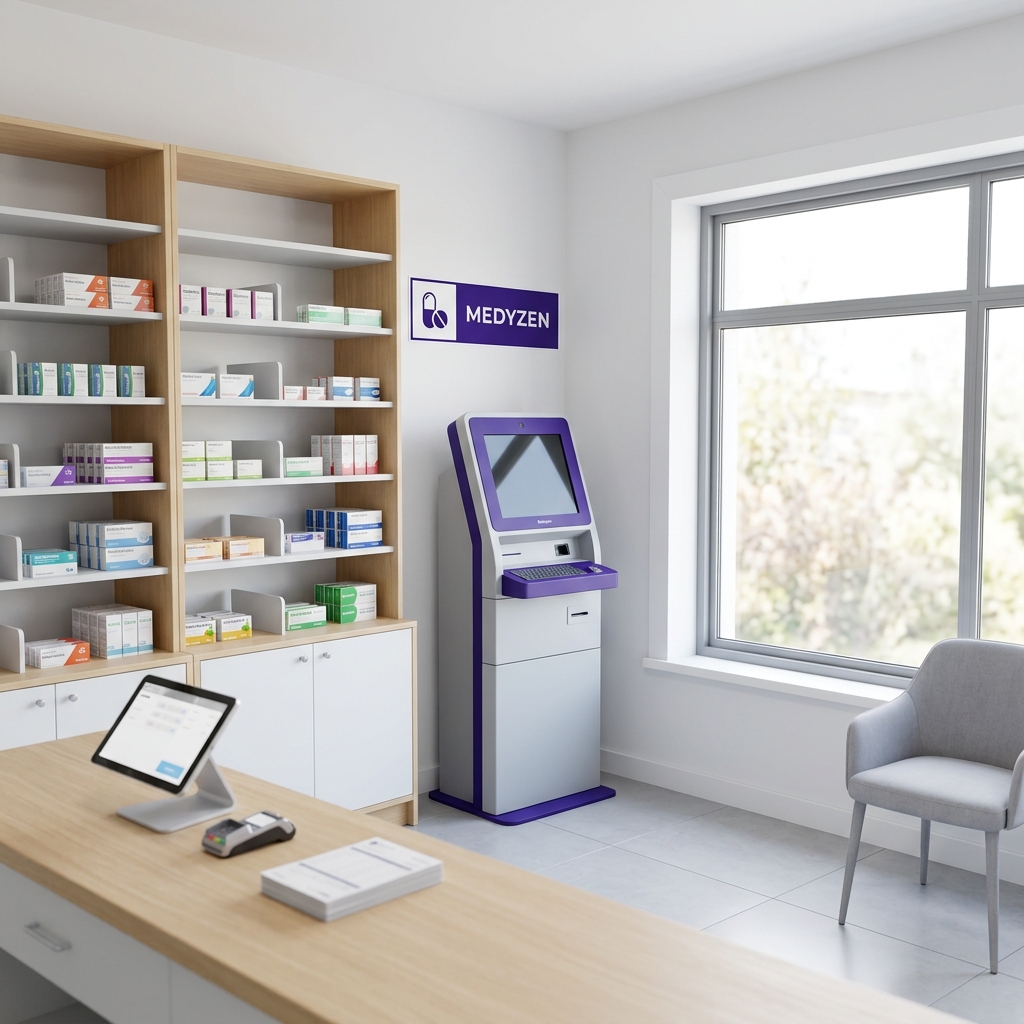
Pharmacy Business Plan in India: What to Include
The sections a pharmacy business plan actually needs in India: budget breakdown, location strategy, growth plan, and financial projections, with real numbers.

This walks through each section with real figures, not placeholder categories, since a business plan built on vague line items doesn't actually help anyone make a genuinely informed decision.
What does the budget breakdown actually look like?
A realistic pharmacy budget splits into four categories, and industry estimates put the total at ₹5–15 lakh depending on scale and location: licences and registrations at ₹30,000 to ₹1 lakh, store setup covering furniture, refrigeration and a billing counter at ₹1.5–5 lakh, initial inventory at ₹2–5 lakh, and technology or billing software at ₹20,000–80,000.
| Category | Typical range |
|---|---|
| Licences and registrations | ₹30,000 – ₹1 lakh |
| Store setup (furniture, fridge, billing counter) | ₹1.5 – ₹5 lakh |
| Initial inventory | ₹2 – ₹5 lakh |
| Technology and billing software | ₹20,000 – ₹80,000 |
Treat these as planning ranges rather than fixed numbers; actual costs shift with city, store size and how wide a medicine range you stock from day one. Our full setup cost breakdown itemises this further for a hospital-scale operation specifically.
Why does location strategy deserve its own section in the plan?
A pharmacy near hospitals, clinics, diagnostic centres or a busy residential zone starts with structurally higher footfall than one in a quiet side street. This single decision affects revenue more than almost any other choice in the plan.
A business plan that skips location reasoning and jumps straight to licensing steps is missing the section that most determines whether the other numbers ever materialise.
Write the location reasoning down explicitly rather than treating it as obvious: which nearby institutions generate prescription volume, what the walking-distance competition looks like, and why this specific spot beats the alternatives you considered. That reasoning is also exactly what a lender wants to see if you're financing any part of the setup.
What inventory and technology systems belong in the plan?
Dedicated pharmacy software, commonly named tools include Marg ERP and GoFrugal, handles three things a spreadsheet cannot do reliably at volume: tracking fast-moving stock so reordering happens before a shelf actually empties, monitoring near-expiry batches before they become a write-off, and managing GST compliance on every transaction automatically rather than as a separate manual step.
Naming the specific system you'll use, and what it costs monthly or as a one-time licence, belongs in the plan rather than being left as a vague "we'll use software" line item. Our inventory management guide covers what this software actually needs to catch to prevent the two biggest silent losses in any pharmacy.
What growth strategy should the plan include beyond opening day?
A plan that stops at "open the doors" is incomplete. WhatsApp-based prescription ordering and neighbourhood home delivery are low-cost additions that extend reach beyond walk-in footfall alone, and they're worth budgeting for even modestly at launch rather than treating them as a someday feature.
Beyond delivery, the plan should state honestly which model you're building toward: a pure retail operation, a wholesale supply relationship, or eventually both. Our in-house vs managed vs franchise comparison is relevant if any part of your growth plan involves scaling beyond a single self-run store.
What financial projections does a lender actually want to see?
Revenue projections built on a specific footfall estimate, tied to your actual chosen location and its foot traffic drivers, are far more credible than a round number pulled from an industry average. State your assumed daily transaction count, average transaction value, and how both are expected to grow over the first year, then show the math connecting those assumptions to a monthly revenue figure rather than presenting the figure alone.
Net margin matters more than gross margin when projecting pharmacy finances. Gross margins on medicines look healthy on paper, but rent, staffing, expiry losses and dead stock bring real net margin down substantially, and a lender or investor who has seen other pharmacy plans will notice immediately if your projection ignores this gap. Our honest profitability breakdown covers exactly what separates gross from net margin with real numbers.
How is a business plan different from a licence application?
A licence application proves regulatory eligibility to a government authority: premises, pharmacist, documents. A business plan proves commercial viability to yourself, a lender, or a partner instead, needing honest numbers a licence application never asks for: your footfall assumption, your true net margin after real costs.
Confusing the two is a common mistake. Completing the licensing process can make a separate plan feel unnecessary, when the two serve entirely different purposes.
For the licensing side specifically, our drug licence guide and documents checklist cover that process in full; this page is deliberately about the planning document instead.
What's a common mistake pharmacies make when writing the plan?
Copying a generic business plan template and swapping in "pharmacy" without adjusting for the specific dynamics of medicine retail is the most common mistake. It produces a document that looks complete but doesn't actually help anyone make a real decision.
A generic template rarely accounts for the fact that inventory in a pharmacy carries expiry risk no other retail category deals with in the same way, or that a registered pharmacist is a legal requirement rather than a staffing preference.
The second common mistake is treating the plan as a one-time document written before opening and never revisited afterward. A pharmacy business plan worth having should be checked against actual results after three, six and twelve months, adjusting the assumptions that turned out wrong rather than treating the original projections as fixed once the store is running.
Neither mistake is expensive to avoid, and neither requires special expertise to fix. Both simply require treating the plan as a working document you revisit regularly, not a formality written once to satisfy a lender and then filed away and forgotten.
Sources
- 1Central Drugs Standard Control Organisation — Drugs and Cosmetics Act, 1940 and Rules, 1945
- 2Goods and Services Tax Network — GST registration and compliance
- 3Pharmacy Council of India — registration requirements under the Pharmacy Act, 1948
- 4Ministry of Micro, Small and Medium Enterprises — business registration and MSME support schemes
- 5ONDLS - Online National Drugs Licensing System — Central Drugs Standard Control Organisation
Skip the business plan
For hospitals, Medyzen funds and runs the pharmacy — you just earn.
This article is for informational purposes and is not a substitute for professional financial or legal advice. Costs and figures are directional estimates; verify current numbers against your specific city and state before finalising a plan.
FAQ
Frequently asked questions
Total setup investment commonly runs ₹5–15 lakh across licensing, store setup, initial inventory and technology, though the exact figure depends heavily on city, store size and how wide a medicine range you stock initially.
Generally profitable, but net margin after rent, staffing, expiry losses and dead stock runs considerably lower than the headline gross margin suggests. Our detailed profitability guide breaks down the honest numbers.
Location reasoning backed by real footfall drivers, a named inventory and billing system, a growth strategy covering delivery or wholesale expansion, and financial projections tied to specific assumptions rather than a single round revenue number.
No, licensing and business planning are separate processes. A drug licence application requires regulatory documents like premises proof and pharmacist credentials. A business plan is a commercial document you'd use for your own decision-making or to secure financing, and it isn't a licensing requirement itself.
Dr. Vikram NairPharm.D, M.Pharm (Pharmacy Practice)
Clinical Pharmacist & Pharmacy Operations Specialist
Dr. Vikram Nair is a clinical pharmacist specializing in pharmacy licensing, GST and regulatory compliance, and hospital pharmacy operations in India.